
In memory of those who served in the West Africa Squadron…
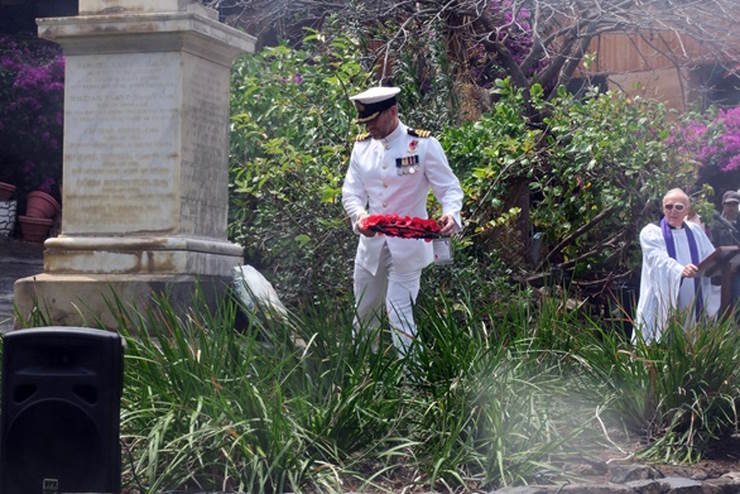
The Year is 1807
The British Parliament has just passed the Slave Trade Act, prohibiting the trade in enslaved people throughout the Empire.
A few months later the Royal Navy established the West Africa Squadron – later known as the Anti‑Slavery Fleet.
It was a bold, even paradoxical decision for its time: immense financial costs, no direct profits.
The Admiralty assigned squadrons to patrol the coast of West Africa – from Sierra Leone to the Gulf of Guinea – to intercept ships carrying enslaved people towards the Caribbean and the Americas.
The fleet grew: frigates, brigs, later steamships.
They seized dozens, eventually hundreds of ships each year.
The rescued – people once packed into holds like cargo – were taken to the colony in Sierra Leone, where they began new lives as “registered freedmen.”
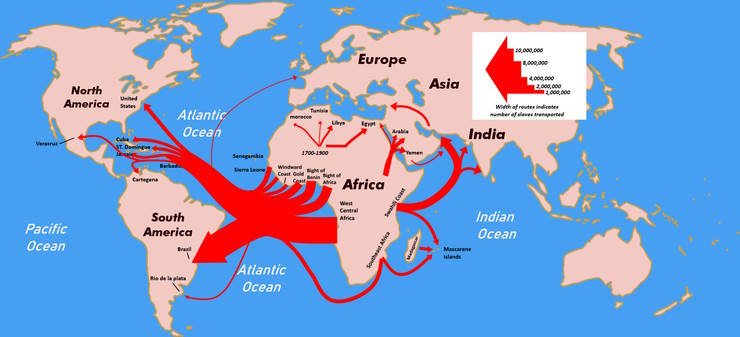
Slave trade out of Africa, 1500–1900. Author: KuroNekoNiyah. Licensed under the Creative Commons Attribution-Share Alike 4.0 International license.
It was a world of difficult moral choices. Sailors of the Squadron died in large numbers of malaria – the West African coast earned the grim title White Man’s Grave.
They were sometimes accused of overstepping their authority and using excessive force, yet for the thousands of people captured aboard ships flying Portuguese, Spanish or Brazilian flags whom the Royal Navy overtook – they were angels.
Over nearly six decades of operations this fleet achieved:
• more than 150,000 people freed,
• over 1,600 slave ships captured,
• and nations such as Portugal, Brazil and Spain compelled to sign treaties banning the trade.
It was also the beginning of something new – an early form of international maritime law in defence of human rights: ships could be stopped not for piracy, but for human trafficking.
The Anti‑Slavery Fleet remained active until the 1860s, and its spirit – the belief that no profit can justify enslavement – outlived its sails.
HMS Black Joke (formerly Henriqueta)
– A real ship, originally built in Baltimore (USA) around 1820 as a fast merchant brig.
– In 1827 the British frigate HMS Syren intercepted her off the West African coast – the ship carried 569 enslaved people.
– Soon after, the Royal Navy commissioned the captured vessel into service and gave it the ironic name HMS Black Joke.
– During her service (1828–1832) she became legendary – one of the fastest ships on the West African coast, regularly overtaking larger slavers such as Mariner, El Almirante, and Veloz Pascual.
– In just four years the brig Black Joke freed over 3,000 enslaved people.
– Her last captain, Henry Downs, was killed in 1832 while pursuing the slave ship Havannah.
After his death the ship was declared unfit for service and broken up in Sierra Leone. For the sailors it marked the end of an era – the anti‑slavery fleet had lost its living legend.
The Royal Navy logs preserve Captain Downs’s report, in which he wrote:
“We did not chase gold. We chased people and their freedom.”
– Original held in the National Archives, Kew, London.