The Amber Coast
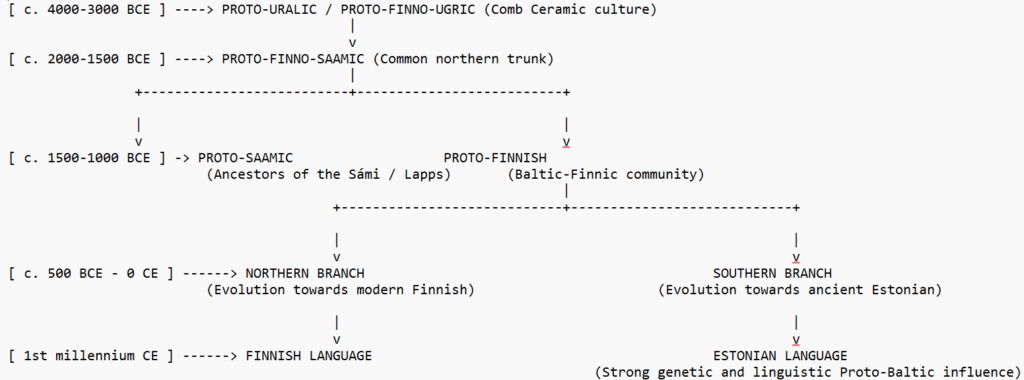
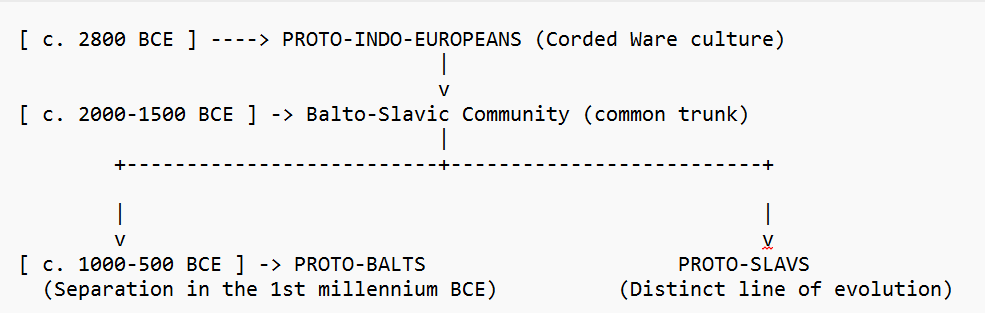
The Baltic coast has been inhabited by humans for millennia. Excavations found so far show that the Kunda culture existed in these areas around 9000-5000 BC. This ancient community was eventually absorbed by Finno-Ugric peoples who began arriving around 4000 BC, forming the Pit-Comb Ware culture. However, it was the arrival of Indo-European peoples (around 2800 BC) that drastically altered the genetic profile of the Amber Coast’s inhabitants, laying the foundations for the future nations of Lithuanians, Latvians, and Estonians, as well as their unique languages.
But before these nations could emerge, the Western Baltic tribes fell entirely to the Germans, who began pouring into these lands in the 13th century, leading to their utter destruction.
In the territories of modern-day Latvia and Estonia, the Germans conducted a brutal colonization that ended tragically for the indigenous tribes. Built on deep segregation, where the locals were contemptuously labeled as „Undeutsche”, they were, over time, transformed from free people into serfs bound to the soil-slaves who could be bought, sold, or gambled away in card games like a table or a chair.
From then on, an ever-growing societal divide became visible. The German elite, making up only a few percent of the population, created the first master caste on these lands, holding nearly all the land and absolute power until World War I.
For the inhabitants of the Amber Coast, the 20th century brought another wave of extermination on an unprecedented scale. Following their capture of the Baltic coast, Moscow initiated its class purges. The old German master caste was replaced by a communist master class, and the conquered population was forced once again to live in terror…
Yet, the spirit dormant within these few nations would not allow them to live in chains until the end of time. They waited long for a fresh gust of wind to bring them their hard-won freedom. On August 23, 1989, on the 50th anniversary of the Molotov-Ribbentrop Pact, the people of the Eastern Baltic formed a human chain of holding hands that stretched from the capital of Estonia to the capital of Lithuania. Over two million people-roughly one-quarter of the population-created a living chain spanning over 600 kilometers.
The Layers of Time: Historical Evidence of Subjugation and Resistance
1. Conquest and Medieval Colonial Racism (13th – 16th Century)
Historical Sources: Chronicle of Henry of Livonia (Chronicon Livoniae, 13th c.), Chronicle of the Prussian Land by Peter of Dusburg, research on the Undeutsche system in Hanseatic cities.
– The Northern Crusades (13th c.): Under the pretext of Christianisation, German military religious orders (the Teutonic Knights and the Livonian Brothers of the Sword) carry out the complete extermination of the Western Baltics (the Prussians and the Yotvingians). Their lands are colonised. The indigenous population was reduced by over 50-70%. Some tribes (like the Yotvingians) ceased to exist entirely (100%).
– The „Undeutsche” System: In the conquered territories of Latvia and Estonia (Livonia), the invaders introduce a legal system of segregation. The indigenous population is stripped of municipal rights and personal liberty, contemptuously labeled as „non-Germans”.
– The Birth of Slavery: Once-free indigenous inhabitants are forcibly bound to the soil as the property of German barons. They become commodities-legally sanctioned live inventory that the master can sell, give away, or kill.
– The Structure of Slavery: German Baltic barons made up only 1% to 3% of the population of Livonia (modern-day Latvia and Estonia). This microscopic minority held 100% of the political power and over 90% of all land, turning nearly 97% of the native population into unfree peasants.
2. The Tsarist Roller and the Eradication of Identity (18th – 19th Century)
Historical Sources: Archives of the Russian Empire (Tsarist Ukases from the years 1832-1890), history of the Lithuanian press ban (Knygnešiai), research by Prof. Andrzej Nowak.
– The Great Northern War (1700-1721): Peter the Great conquers Estonia and Latvia. The region is devastated. Tsarist Field Marshal Sheremetev reports to the Tsar: „In the enemy’s land, there is nowhere left to look, everything has been burned and destroyed.” In Estonia alone, the population plummeted from around 350,000-400,000 to a mere 150,000-170,000. Famine, plague, and massacres wiped out 50% to 60% of the entire Estonian nation.
– For comparison: This is as if 850 million people suddenly died in modern-day China, and 200 million in the USA.
* Partitions of the Polish-Lithuanian Commonwealth (1795): Lithuania is swallowed by the Russian Empire. A brutal, century-long Russification begins.
– Ban on Language and Faith (1864-1904): Following the suppression of the January Uprising, the Tsar issues a total ban on printing the Lithuanian language using the Latin alphabet. Churches and schools are shut down.
– Deportations to the Siberian Slave Colony after Uprisings (19th c.): Following the January Uprising (1863), over 10% of the entire Lithuanian patriotic elite and intelligentsia were sent to Siberia and Tsarist prisons from Lithuania alone.
– The „Knygnešiai” Movement (Book Smugglers): Lithuanians build an underground network to smuggle books from Prussia. Thousands of people are sent to Siberia merely for possessing a primer in their native language. This was a cultural defense against biological and spiritual annihilation.
3. Broken Chains – The Triumph of Independence (1918 – 1940)
Historical Sources: Acts of Independence of Lithuania, Latvia, and Estonia (1918), peace treaties with Moscow (1920).
– The Year 1918: Exploiting the collapse of Tsardom and the defeat of Germany in World War I, Lithuania, Latvia, and Estonia declare independence.
– Wars of Independence (1918-1920): The young republics must immediately repel an armed invasion by the Red Army (Bolsheviks) and the remnants of German forces (the Bermondtians). Through incredible determination and the help of volunteers, they win these wars.
– The Golden Age: For over 20 years, these countries build modern, free societies, developing education and the economy. It is this very generation, raised in freedom, that will later form the core of the „Forest Brothers”-they refused to become slaves once again.
4. Occupations and Deportations 1940 – 1953
Historical Sources: Genocide and Resistance Research Centre of Lithuania, Latvian and Estonian archives, research by Prof. Timothy Snyder (Bloodlands, 2010).
– June 1940: The USSR occupies Lithuania, Latvia, and Estonia. Governments are overthrown; repressions begin immediately.
– The 1941 Deportations: Around 60,000 Baltic citizens (including around 18,000 from Lithuania) are deported to Siberia; more than half never returned.
– The German Occupation (1941-1944): The Holocaust and the extermination of the Jewish minority-over 90% of the Jewish community (~200,000 people) was murdered in Lithuania.
– The Second Soviet Occupation (1944-1953): Mass arrests and subsequent deportations. Death or exile befell the social elites, the military, the intelligentsia, and the peasants.
5. The „Forest Brothers” Guerrilla Warfare 1944 – 1956
Historical Sources: Riga Occupation Museum, Vilnius Genocide Museum, publications by ERA-Archives (USA).
– Following 1944, around 50,000 people fled to the forests (the vast majority in Lithuania).
– Guerrilla units fought the NKVD/MGB until the early 1950s.
– It is estimated that 20,000-30,000 Forest Brothers died, while hundreds of thousands more faced repressions for aiding the partisans.
– The last known active Lithuanian partisan, Antanas Kraujelis, died in 1965.
The „Forest Brothers” (Baltic Forest Brothers), ca. 1944 – 1960s## The Beginning
– Following the re-occupation of Lithuania, Latvia, and Estonia by the USSR (1944), tens of thousands of young men fled to escape conscription into the Red Army.
– From them, armed units of anti-Soviet guerrillas emerged, known as the Forest Brothers (Lithuanian: Miško broliai, Latvian: Meža brāļi, Estonian: Metsavennad).
The Scale of the Movement
– In Lithuania: According to NKWD archives and research by the Lithuanian Genocide Centre, around 30,000 armed partisans fought; including civil support networks, a total of 135,000 people were involved (approximately 5% of the population).
– Combatant Mortality: Out of the 30,000 armed partisans in Lithuania, around 20,000 died in battle or were tortured to death during interrogations. This represents a 66% (two-thirds) mortality rate among the fighters.
– In Latvia: Around 20,000 active fighters.
– In Estonia: Around 15,000 at the peak of the movement (1945-1947).
Losses and Repressions
– Around 50,000-60,000 partisans from all three countries lost their lives.
– Over 200,000 people were deported to Siberia and Kazakhstan for providing aid to the guerrilla units.
– In Lithuania, the activities of the Forest Brothers lasted the longest-the last known partisan, Antanas Kraujelis-Siaubūnas, died in March 1965 in the Utena region.
– In Latvia and Estonia, the last uncovered members of the underground were arrested around 1953.
Social Background
– 80-90% of the partisans came from peasant families.
– In rural regions, nearly every single family provided them with aid-food, shelter, and intelligence.
– The Soviet authorities retaliated with a „scorched earth” policy: mass arrests, burning down farms, and public executions.
Repressions and Deportations
– The 1941 Deportations and Operations „Vesna” / „Osen”: Between 1940 and 1953, the Soviets deported approximately 300,000-350,000 people from the three Baltic countries to Siberia and Kazakhstan.
– The Tragedy in Percentages: This meant the forced deportation of roughly 10% to 12% of the region’s entire population.
– For Comparison: For the USA, this would equal the deportation of 40 million citizens (the entire population of the state of California) to labor camps in the Arctic. For China, it is the equivalent of deporting 140 million people.
Reclaiming Memory
– After 1991, Lithuania, Latvia, and Estonia officially recognized the Forest Brothers as freedom fighters.
– Museums dedicated to the Baltic partisan movements were established in Vilnius and Riga.
| Country | Population (1939) | Total Losses (Killed + Deported) | Percentage of Total Population Lost | Equivalent Scale for the USA Today | Equivalent Scale for China Today |
|—|—|—|—|—|—|
| Lithuania | ~2.9 million | ~450,000 | 15.5% | ~52 million people | ~217 million people |
| Latvia | ~1.9 million | ~300,000 | 15.7% | ~53 million people | ~220 million people |
| Estonia | ~1.1 million | ~175,000 | 15.9% | ~54 million people | ~222 million people |
Methodological Note to the Table: Total losses include victims of Soviet deportations, NKWD purges, the German Holocaust, and those fallen in guerrilla warfare between 1939 and 1953.
While great powers like the USA or China count their wartime losses in fractions of a percent, for the nations of the Amber Coast, the onslaught of the totalitarians was a fatal blow. In the span of just over a decade (1939-1953), every sixth resident in Lithuania, Latvia, and Estonia was killed or deported to the Siberian slave colony. Imagine if the entire population of California and Texas suddenly vanished from the map of the United States, or if the population of several of the largest megacities in China perished. This was no ordinary war-it was a systematic attempt at the biological erasure of small nations from the face of the Earth.