
The Chest of Voices by the River of Fate
At the end of the 19th century, as the steamroller of Russification and Germanisation attempted to permanently erase Baltic culture, a small, humble man undertook a solitary struggle to save this code. His name was Krišjānis Barons.
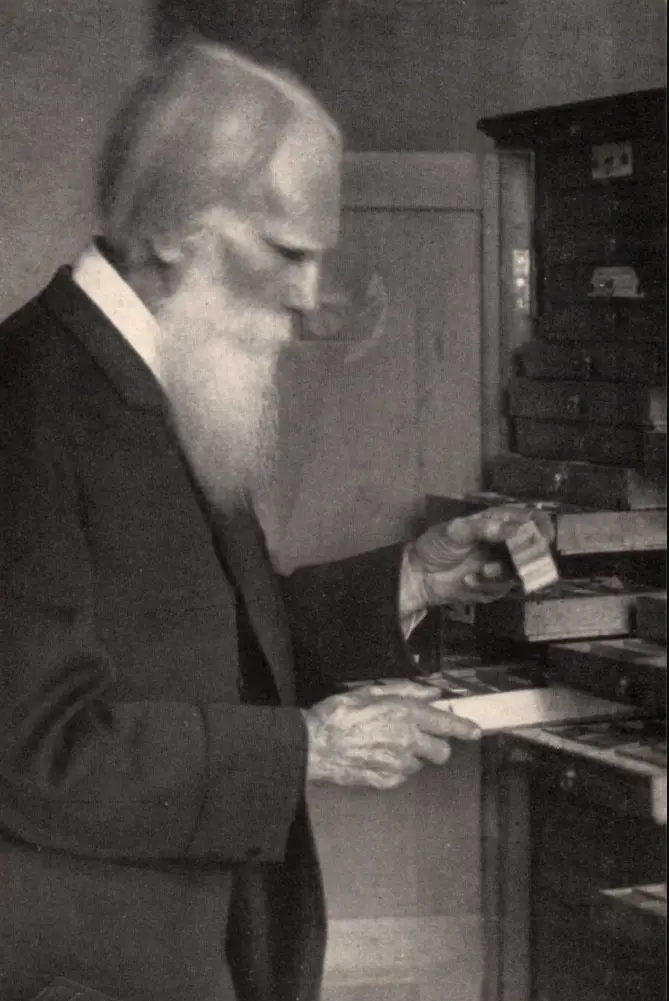
Krišjānis Barons
He packed his modest bundle and set out on foot across the Latvian wilderness, along the banks of the Daugava River. He wandered from village to village, sat by the smoke-shrouded stoves in the poorest huts, and listened to old, life-weary women who still remembered the songs of their great-grandmothers from the times of deepest slavery. He wrote down every word on tiny, cut-up scraps of paper-often on the backs of discarded cigarette packs.
To bring order to this mammoth treasury, Krišjānis single-handedly built a special cabinet with thousands of tiny drawers-the Dainu Skapis. Each drawer hid hundreds of small slips of paper, each like a glowing ember. This cabinet was no ordinary piece of furniture. It was the first physical server of Latvian identity. Barons saved over a million songs from death. He rescued the spiritual shield of his nation. It was from these very drawers, a hundred years later, that Latvians drew the strength to stand against Soviet tanks during the Singing Revolution (1989-1991) and win their freedom without firing a single shot-solely through the power of their voices.