
August Sabbe (1909-1978)
The Unyielding Alpha
Some fires smoulder quietly, hidden deep within the peat, invisible to the eyes of hunters but impossible to extinguish. August Sabbe was born on 1 September 1909 in the idyllic parish of Rõuge, in the southern Estonian region of Võrumaa. He was a son of this soil, raised among the dense boreal forests and treacherous mires that would, in time, become his only home. When the Soviet steamroller swept through Estonia in the 1940s, destroying the independent state and bringing mass deportations to Siberia, August knew that bowing his head meant losing his soul.
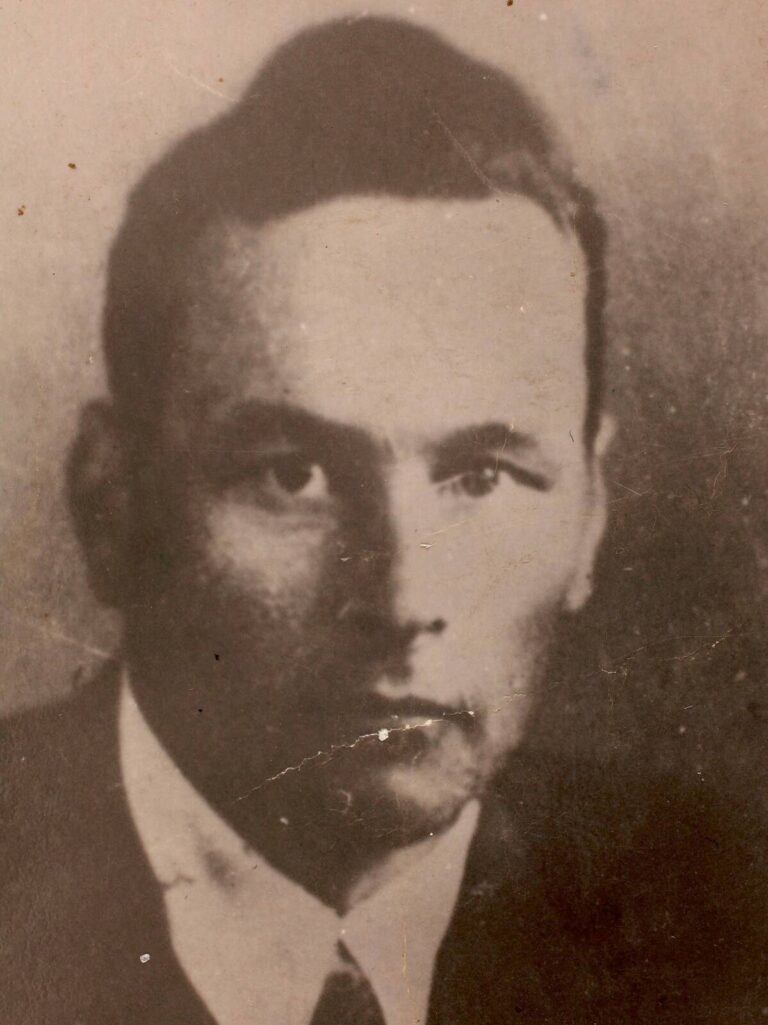
In 1941, wanting to avoid forced conscription into the Red Army, he vanished into the woods, joining the ranks of the Metsavennad – the Forest Brothers. For the next several years, he fought with weapon in hand against the Soviet occupation, first in the local home guard and, after the official end of World War II, as a soldier of the anti-communist underground. When the organised resistance began to die out in the early 1950s under the weight of ruthless KGB pacifications, August made a decision that seems like madness from the perspective of the modern world. He chose absolute, uncompromising isolation. For thirty-four years, he lived deep within the Estonian taiga as a lone wolf, becoming the longest-surviving partisan in his country’s history.
August’s life turned into a permanent test of survival. He built no permanent camps; he lived in primitive, earthen bunkers that he masked with moss and branches, or hid in swamps where no Soviet pursuit dared to venture. He endured harsh Estonian winters, when temperatures dropped below minus thirty degrees, feeding on what the forest provided and gifts from a few trusted people who saw the old partisan as a living Monument to Freedom. The KGB snapped at his heels for decades, viewing him as a dangerous relic of an old world whose very existence compromised the myth of Estonia’s total subjugation. Sabbe evaded their ambushes with the precision of an old alpha who knows every trail and can scent danger from a mile away.
The end came on 28 September 1978 on the banks of the picturesque Võhandu River, near the village of Paidra. August was 69 years old at the time. He was cornered by two young, highly trained KGB agents – Erwin Lepman and a communist militia officer – who, pretending to be fishermen, approached him within arm’s reach. The old, ailing wolf saw through their game instantly. When the agents lunged at him to pin on handcuffs, the 69-year-old partisan launched into his final, fierce hand-to-hand combat.
Realising that the odds were stacked against him and that he faced the grim spectre of a brutal interrogation at the Pagari prison in Tallinn, followed by a slow death in a gulag, August executed the ultimate manifest of a free spirit. During the struggle, he managed to break free from his captors and leapt into the rushing, icy current of the Võhandu River. Witnesses to those events and subsequent analyses revealed that Sabbe did not attempt to swim to the opposite bank – he deliberately dove and wedged his body beneath a heavy log sunken in the mud, ensuring that the agents could not pull him out alive. He drowned on his own terms, as a free man, refusing to let a collar be placed upon his neck until his very last breath.
Source: wikipedia.org
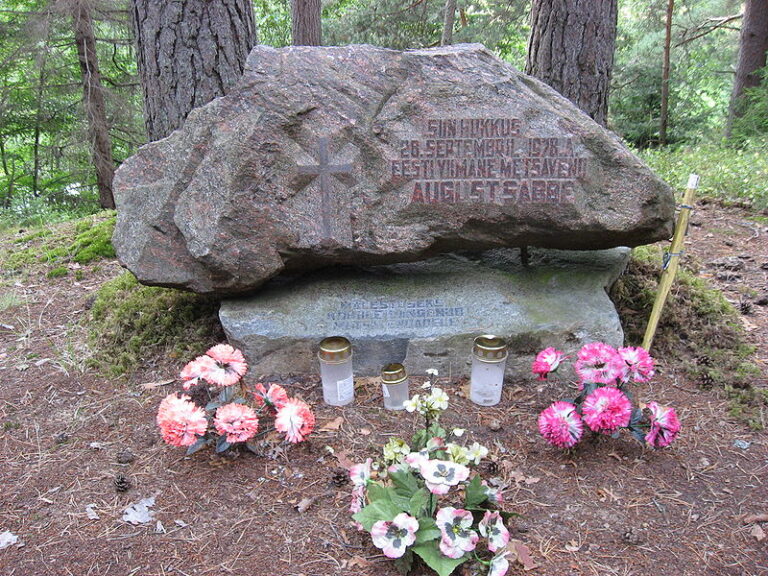
For years, the Soviet regime tried to erase his name from the pages of history, burying him in an unmarked grave. Today, August Sabbe is a legend in Estonia, and a stone monument stands at the site of his death by the Võhandu River, its engraved inscription bearing witness to his steadfastness. It is the story of an old alpha who proved to the world that an inner fire cannot be extinguished, not even by three decades of solitude in a freezing forest.